















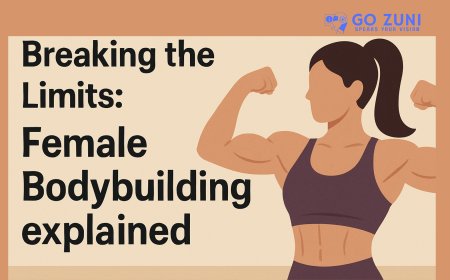










A beginner’s guide to understand Female Bodybuilding
Female Bodybuilding is on the rise. Learn how bodybuilder women are challenging stereotypes and empowering fitness journeys across generations.
Introduction
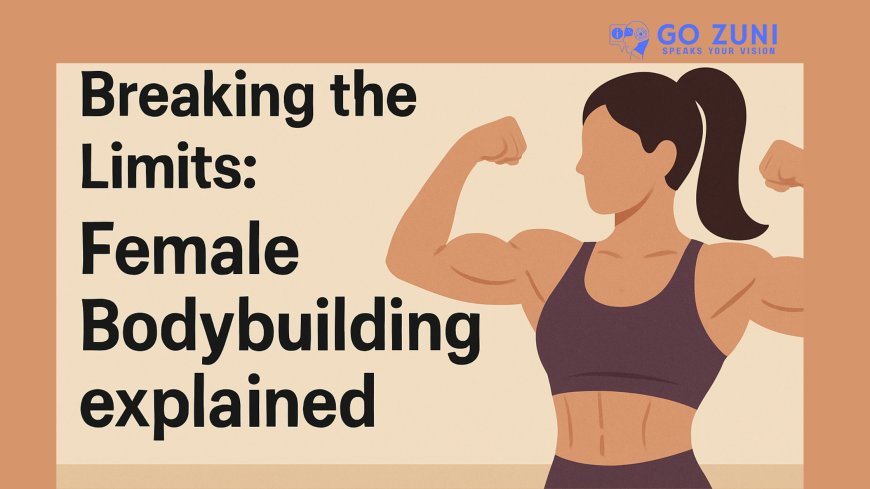
For a long time, the gym was perceived by the general public as a male-dominated space; however, that narrative is shifting with the times. Female Bodybuilding has emerged from the depths of stereotypes, and is now taking the centre stage in the fitness world.
In recent trends, there has been an increasing number of women interested in Female Bodybuilding. As more and more body builder women step into the spotlight, challenging outdated gender norms, transforming their bodies, and inspiring a new generation of women into Female Bodybuilding
Lifting weights is no longer taboo for women because of its bodybuilding qualities. Female Bodybuilding helps women to not only challenge long-standing stereotypes related to their bodies but also to embrace stronger versions of themselves that don’t just conform to feminine aesthetics, promoting a healthy mindset among all fit women.
The focus of this article is not to dissect how vastly different men’s fitness is viewed as compared to women’s fitness, but to explore this new trend of female bodybuilder and its slow build-up to the boom of strength training in Female Bodybuilding.
We will also be looking at the origins of women’s bodybuilding from the past to its present central role in women’s fitness.
Whether you’re looking to increase your endurance, begin your fitness journey, or commit to a full-body transformation, this article provides several pockets of insight that are tailored to help modern women navigate the world of fitness culture, especially within Female Bodybuilding.
Curious about how technology can positively benefit the sports industry? Read here to find out!
The Rise of Female Body Building
Men’s body building gained popularity in the 1890s as a way to gain strength and measure power, especially among ancient Egyptian and Greek societies. People from these societies would use various-sized stones as weights to aid their body transformation, and build their strength like a body builder.
Later in the 1970s, women started to work on muscle mass and weight lifting in competition with one another, paving the way for Female Bodybuilding to be recognised.
At the time, there wasn’t a separate category for women’s sports, due to which Female Bodybuilding was not taken seriously.
Muscular women were not seen as attractive, and women who did choose to participate in the sport faced sexism, dismissal, or were objectified when recognised. But as the number of Female bodybuilder in women’s bodybuilding increased, and body builder women were granted more independence, the idea around women's power training and Female Bodybuilding became more acceptable, encouraging fit women to try women weight training.
A Brief Overview of the History of Female Body builders
One of the earliest pioneers in women’s power training sport was Rachel McLish. In 1980, McLish won the first Miss Olympia championships, which resulted in a successful media career and expanded the reach of Female Bodybuilding.
IFBB Historian for Women’s Bodybuilding Steve Wennerstrom states that the birth of Female Bodybuilding did not just happen by chance. Henry McGhee, a primary architect of the sport, carried the strong belief that fit women should be able to share the opportunity of displaying their bodybuilding physiques just as men had done for years.
It wasn’t until the 1970s that a female division in bodybuilding was established and run by Miss Olympia herself, amongst other bodybuilding competitions. At the time, Men’s bodybuilding competitions always had a women’s bikini contest attached to their show.
As the feminist movement in the 70’s became more popular, female power training competitions became the catalyst for Female Bodybuilding to become legitimate, eventually creating demand for a well-structured workout plan for women.
In the coming years from 1999 to 2011, there were 21 women who were inducted into the IFBB Hall of Fame. There were also categories such as Fitness and Figure that were added to the competition for versatility, promoting a more inclusive workout plan for women and fitness beginners.
The world of professional Female Bodybuilding throughout its 50 years in the field faced similar scandals and troubles, just as the male division.
Yet, the women’s bodybuilding industry that we know today has been thriving and has remained relevant in the mainstream, especially as more women weight training enthusiasts, advocates with a health mind set embrace their evolving fitness journey and holistic body transformation.
Read about the rise of Sports Psychology here.
From Taboo to Trend: Breaking Stereotypes
In this section, the narrative of Female Bodybuilding being a gendered sport will be discussed while using insights from academic texts to explore how the women’s bodybuilding industry is perceived by the public, and how this breaks existing societal stereotypes around Female Bodybuilding.
In an ethnographic study conducted by British researchers Tanya Bunsell and Chris Shilling, they conducted a two-year ethnographic study in six British gyms with active or former female body builders.
The study titled “The Female Body Builder as a gender outlaw” provides a closer look into the lives of female body builders who position themselves as “gender outlaws”.
Here are some of the stereotypical norms mentioned by Bunsell and Shilling in their study, which these Female body builders are ‘breaking’ because of which the sport of women’s bodybuilding was considered taboo:
Taboo-1: Female Body Builders having “Impossible bodies”
Shilling and Bunsell describe the female bodybuilder as existing in a grey space that does not fit into the binaries of masculine or feminine.
As mentioned in the study, “They are too muscular to be feminine, and too feminine to be masculine.” By challenging the rigid gender binaries that society places people into, and also by not conforming to these aesthetic expectations, women’s bodybuilding disrupts how women are supposed to act.
These “impossible bodies” are then considered socially unsettling because they expose existing gender categories, challenging cultural ideas of beauty, health, and the fitness journey.
Taboo-2: Too much visibility
The study frames these women as resistors, in the way that their bodies are readily visible in the public eye for judgement, scrutiny or often ridiculed but yet they persist.
This persistence despite challenges is the reason why these researchers refer to these women as resistors, as it becomes an active act of resistance, not just against sexism, but against a culture that constantly tries to authorise female visibility, strength, and autonomy.
One could also reflect on how this directly contributes to the growing popularity of power training, women strength training, or the shift towards a positive, healthy mindset.
Taboo-3: Cultural Double Standards
The researchers shed light on a cultural contradiction that is central to the base of the study that society celebrates discipline, fitness, and ambition—until a woman is the one who exhibits it. A Female bodybuilder, one of many body builder women forging new paths, represents the limit to which women are socially acceptable.
They portray the same traits that are acceptable in men, like discipline, competitiveness and success, but are penalised for the same behaviours, a reality that fuels calls for a healthy mindset among critics and supporters alike. Their very existence speaks loudly of the double standards present in women’s bodybuilding industry and the ideals of health, acceptable beauty, and athleticism; for many fit women, this double standard only strengthens their resolve to continue women weight training and inspire others to follow a flexible workout plan for women suited to every stage of life.
How Body building is Changing Women’s Health
There are many benefits to Body building for women’s health despite the several cultural myths and societal expectations that are placed on women. Some of these benefits are mentioned below:
- Increased Bone Density: Many medical reports indicate that postmenopausal body builder women are more likely to experience a loss in bone density, which can be prevented by consistent resistance training or power training. This helps to stimulate bone growth and overall mineral density.
- Better Metabolism: Female Bodybuilding can also help to improve metabolism through increased muscle mass that allows the body to burn more calories even while it is at rest. The more muscle mass that a person has, the more calories they will burn. Increased muscle mass can also help build shape to your body and support body transformation goals for fit women.
- Stronger Joints: Women are more likely to get ligament injuries as they age compared to men. Body builder exercises that focus on glutes help to build hip strength and develop stronger muscles that help support the bones and joints, an approach often included in a sustainable workout plan for women, which is essential for fit women at all ages.
- Improved mobility, posture, and balance: A good workout plan for women can help improve bone density, hips and legs, which can help with posture and mobility. Exercising the upper body more frequently can also be beneficial to prevent back and shoulder injuries, especially for fitness beginners.
- Better mental health: Women are more likely than men to develop clinical depression, so the most efficient way to combat this is through working out.
Women weight training releases natural mood-enhancing hormones like dopamine, serotonin, and norepinephrine. Women’s bodybuilding especially helps in getting better sleep, increasing energy levels, a feeling of accomplishment, and maintaining a healthy mindset throughout your fitness journey.
The Future of Female Body building: Top Trends in Female Fitness
As the fitness industry continues to evolve, so does the landscape of Female Bodybuilding. A once small community of strong, well-built women are now becoming more mainstream, as women’s bodybuilding practices are carried into traditional gym culture.
Today’s Female Bodybuilder is not only defined by fitness-related inspirational photos or extreme aesthetics, but focuses on body builder women who’d rather not conform to the masculine or feminine aesthetics of fitness culture. This new wave is no longer about well-sculpted physiques but owning one’s fitness journey and embracing body transformation at any stage.
Emerging trends in Female Bodybuilding now focus on holistic health, rather than just physique. People are now drawn to concepts such as power training, a healthy mindset, and long-term mobility. Fitness beginners, primarily women, are now moving towards workout plans for women that focus on mental and physical wellness.
Even the definition of a body builder has now expanded to include fit women who do not necessarily fit into a Female Bodybuilding aesthetic but train for personal growth and empowerment.
With the amplification of social media, fitness influencers are using their platforms to advocate for women’s health at various sizes, helping to dismantle outdated stereotypes that bring about fear, not curiosity. The presence of more diverse voices helps women to pursue weight training without judgment.
Conclusion
In today’s world, Female Bodybuilding is more than just a sport—it’s a movement towards embracing resilience, strength and redefining beauty standards for today’s women. It is high time that we, as a society, accept that a fitness journey is unique and deeply personalised to a person’s experiences and lifestyle. Whether you’re a fitness beginner wanting to explore a new workout plan for women or interested in exploring women’s weight training, the women’s fitness sphere is welcoming for all.
Follow GoZuni for more sports and culture-related news!
What's Your Reaction?
 Like
1
Like
1
 Dislike
0
Dislike
0
 Love
0
Love
0
 Funny
0
Funny
0
 Angry
0
Angry
0
 Sad
0
Sad
0
 Wow
0
Wow
0